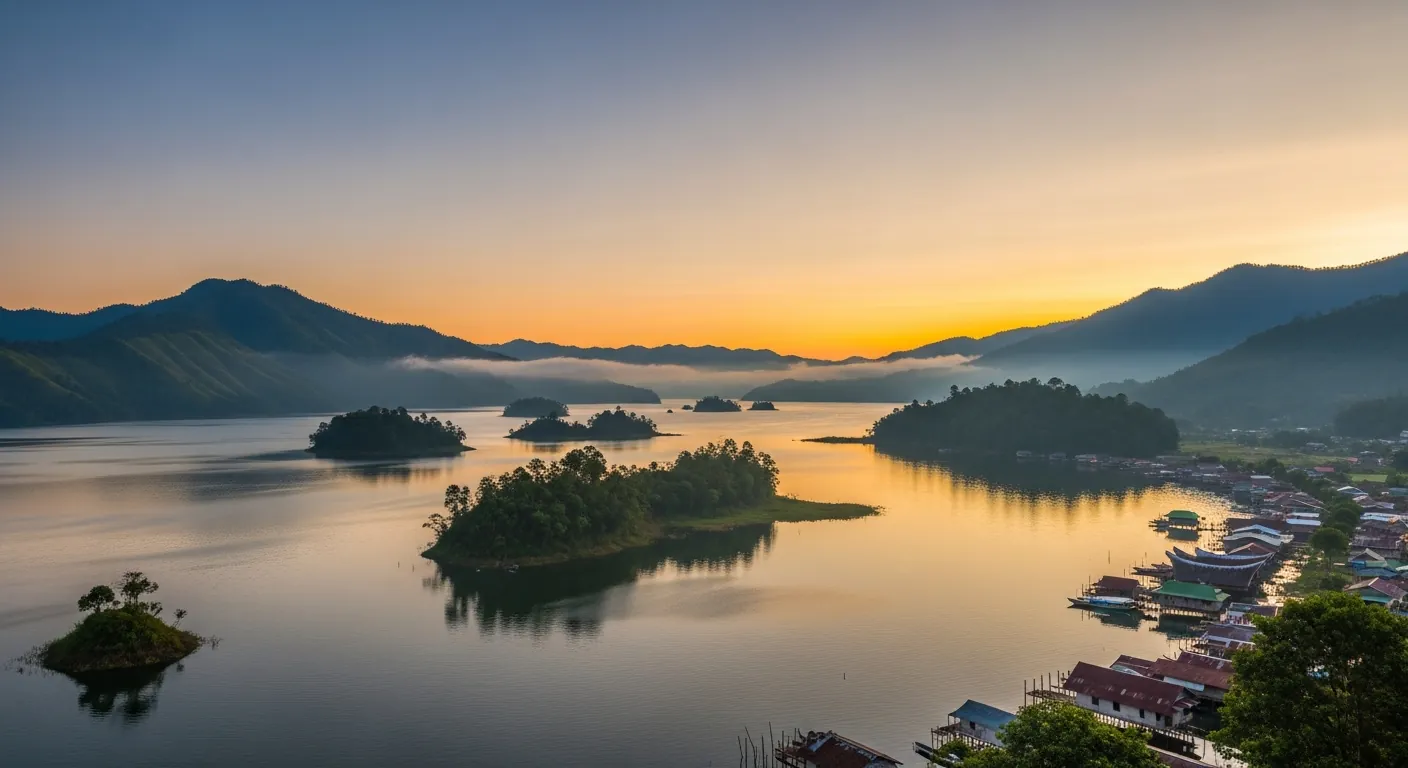
The rhythmic lapping of water against stilt foundations, the distant calls of endemic birds, and the subtle scent of freshwater and woodsmoke define the atmosphere of Lake Sentani. This vast body of water, located at the northeast extremity of Jayapura Regency, Papua, Indonesia, offers a compelling intersection of natural history and enduring cultural practices. It represents a significant ecological and social landscape for visitors to eastern Indonesia.
Navigating Lake Sentani: Access and Geography
Lake Sentani serves as a primary geographical and cultural anchor for the region, lying approximately 20 kilometres west of Jayapura City. Its surface area spans about 104 square kilometres, making it one of the largest freshwater lakes in Papua. The lake’s coordinates are precisely around 2.61 degrees south and 140.56 degrees east, situating it within a tropical equatorial zone. This location places it within the administrative boundaries of the Jayapura Regency, specifically influencing the lives and livelihoods of numerous communities along its shores and on its islands. Access to the lake is primarily facilitated through Sentani Kota, the main nearby town situated to the north of the lake. From Sentani Kota, local transportation options, including motorbikes and small boats, connect visitors to various points of interest around the lake, including the island villages and mainland settlements. The proximity to Jayapura’s international airport also positions Lake Sentani as a convenient first or last stop for travellers arriving in or departing from Papua, including those transiting to the highland regions.
Cultural Heartbeat: Island Villages and Traditional Life
Life on Lake Sentani revolves around its numerous island villages, where traditional Papuan stilt houses line the shores. Asei Island, for instance, stands as a prominent cultural hub, known for its intricate bark-cloth art, locally called “khombow.” These artistic expressions often depict ancient symbols, daily life, and the rich biodiversity of the lake and its surroundings. The techniques for creating bark-cloth art have been passed down through generations, making Asei a vital centre for the preservation of this indigenous craft. The architecture of the traditional stilt houses, built directly over the water, reflects a deep understanding of the lake environment and offers a practical response to its fluctuating water levels. These structures are not merely dwellings; they are central to the social fabric of the communities, serving as gathering points and workshops. Visitors to these villages gain direct insight into the daily routines of the Sentani people, from fishing and farming to the creation of their distinctive art forms. The sustained cultural practices here provide a unique window into Papuan heritage.
The Sentani Festival: A Celebration of Heritage
Annually, Lake Sentani becomes the vibrant stage for the Sentani Lake Cultural Festival. This event, typically held over several days, showcases the rich cultural diversity of the Sentani people and the wider Jayapura Regency. The festival features traditional dances, music performances, and elaborate ceremonial rituals, often involving groups from various villages around the lake. A highlight is frequently the “Isosolo” or “Flames on the Lake” ceremony, where dozens of traditional canoes, adorned with fire, paddle across the water in a dramatic display. Crafts markets, culinary stalls offering local Papuan delicacies, and traditional sporting events also form part of the festival’s activities. This gathering not only entertains but also serves as a crucial platform for the preservation and transmission of Sentani cultural practices to younger generations and to a broader audience. The festival attracts both domestic and international visitors, offering a concentrated experience of the region’s artistic and social traditions. The precise dates vary each year, but information is usually available through local tourism offices in Jayapura and Sentani Kota.
Ecological Significance: Cyclops Strict Nature Reserve and Endemic Species
Lake Sentani is not merely a cultural landmark; it is an integral component of the Cyclops Strict Nature Reserve. This designation underscores its profound ecological importance and highlights the need for conservation efforts. The reserve, encompassing the Cyclops Mountains and the lake itself, protects a diverse range of flora and fauna, including several species endemic to Papua. The freshwater ecosystem of Lake Sentani supports a unique array of fish species, some of which are found nowhere else in the world. Examples include the Sentani Rainbowfish (Chilatherina sentaniensis) and the Lake Sentani Gudgeon (Oxyeleotris sentaniensis), among others. These species play crucial roles in the lake’s food web and are indicators of its ecological health. The conservation status of the Cyclops Strict Nature Reserve ensures that the natural habitats surrounding and within the lake are protected from unchecked development and resource exploitation. Understanding the lake’s role within this reserve is essential for appreciating its broader environmental value and the ongoing efforts to preserve its unique biodiversity.
Freshwater Biodiversity of Lake Sentani
The waters of Lake Sentani are home to a remarkable collection of Papuan endemic freshwater fish. This includes species like the Sentani Gudgeon (Oxyeleotris sentaniensis), which represents a significant component of the local aquatic fauna. The presence of such endemic species underscores the unique evolutionary history of the lake and its isolation from other major freshwater systems. Research and conservation initiatives regularly monitor these populations to assess their health and habitat conditions. The lake also supports various other aquatic life, contributing to a complex ecosystem that interacts with the surrounding terrestrial environments of the Cyclops Strict Nature Reserve. The health of these fish populations is directly linked to the water quality and the preservation of the lake’s natural shoreline and submerged vegetation. Efforts by local communities and environmental organizations focus on sustainable fishing practices and preventing pollution to safeguard this irreplaceable biodiversity.
Planning Your Visit: From Jayapura to the Highlands
For travellers near Jayapura, Lake Sentani offers accessible cultural and nature experiences. Transportation from Jayapura City to Sentani Kota, the main town on the lake’s northern shore, is readily available via public mini-buses or private taxis. The journey typically takes under an hour, depending on traffic conditions. From Sentani Kota, local boats can be hired to explore the lake’s islands and villages, providing direct interaction with the communities and their art. For those transiting to the highlands of Papua, Lake Sentani often serves as a gateway. Sentani Airport (DJJ), located near the lake, is the primary air hub for flights connecting to more remote regions of Papua, including Wamena and other highland destinations. This strategic location makes the lake a practical and enriching stopover for adventurers heading further into the interior. Accommodation options range from guesthouses in Sentani Kota to more rustic stays in some of the lakeside villages, offering various levels of comfort for different travel preferences. Effective planning involves considering local transport logistics and respecting community customs, especially when visiting traditional villages.
For further details on Lake Sentani, consult these authoritative sources: Wikipedia, Wikidata, and Sentani (town), Sentani (Jayapura).
Lake Sentani provides a profound glimpse into Papua’s natural beauty and living heritage. To learn more about exploring its unique cultural landscapes and biodiversity, visit sentanilake.com.